This session AP Art History with Yu Bong Ko, is offered ONLINE Week 1: June 15-18, 2026
Meet your APSI Consultant for AP Art History
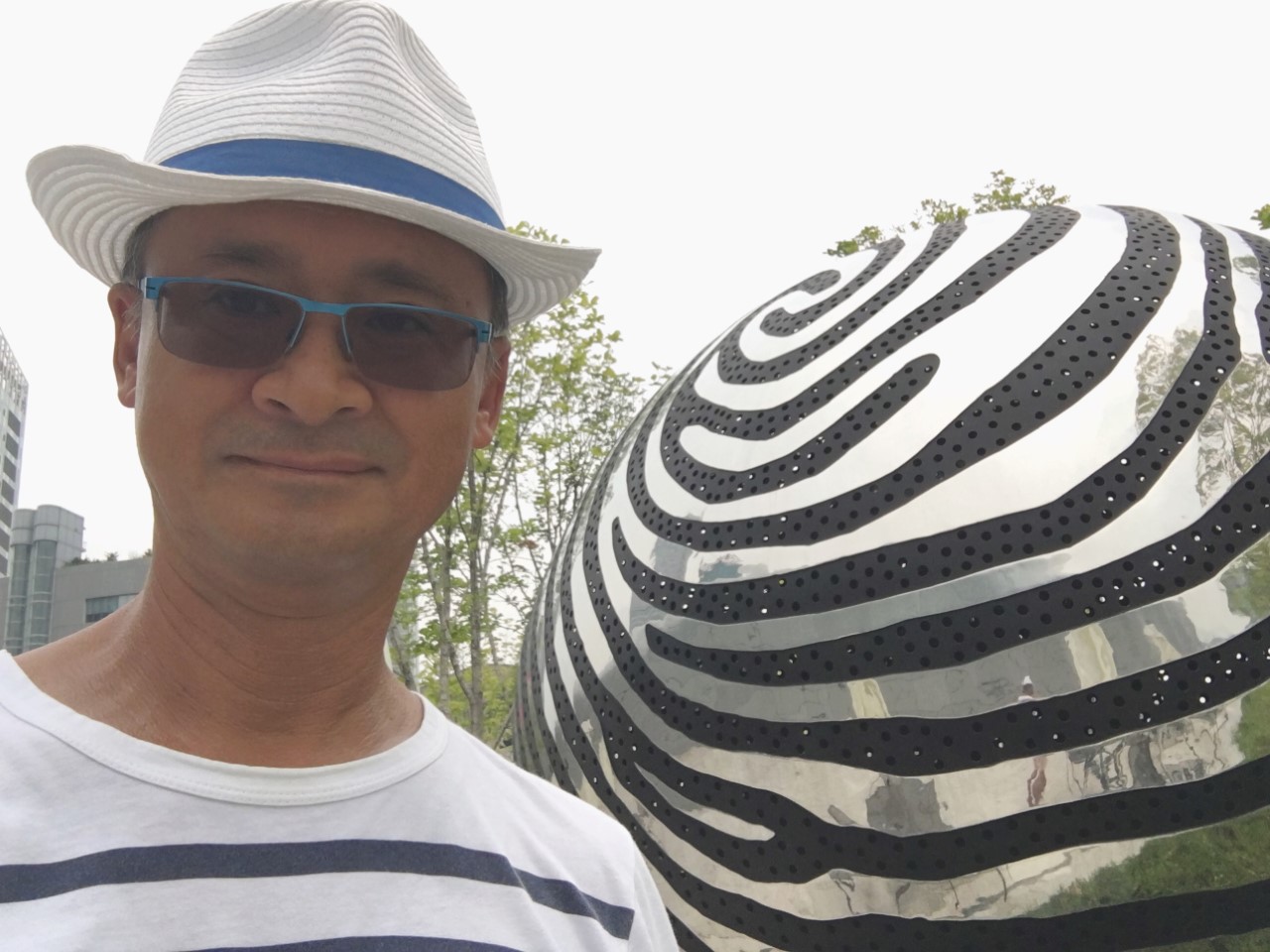
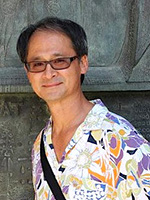
YU BONG KO is a Lecturer in Art History at Dominican University in N.Y. Previously, he taught AP Art History for 26 years at Tappan Zee High School, his alma mater. As a presenter and session leader at College Board endorsed AP Teacher Conferences and Summer Institutes since 1995, his travels have taken him to schools, colleges and museums coast to coast, where he has worked with hundreds of outstanding and dedicated teachers. Yu Bong has scored the AP examinations for 22 consecutive years, having served as Reader, Table Leader and Question Leader. He is a past Co-Chair of the College Board’s AP Art History Test Development Committee and also served on the Curriculum Re-Design Committee to develop the new curriculum framework. In addition, as former College Board Advisor to AP Art History Content and Professional Development, Yu Bong has contributed to two Curriculum Modules publications for teachers on concept-mapping strategies and thematic and cross-cultural approaches to teaching AP Art History. He is a graduate of Brown and Columbia Universities where he studied Painting, Art History and Art Education.
AP Art History APSI Course Description
This online AP Art History APSI workshop will focus on preparing, sustaining and teaching the redesigned curriculum, while anticipating the road ahead for maximizing student success. You will acquire insightful ideas and best teaching practices to immediately and confidently promotes active student-centered learning both in and out of the classroom. Your instructor for this workshop is one of the co-authors of the redesigned curriculum that was implemented in 2015 and updated in 2019. The instructor’s knowledge further includes prior service on the College Board’s Test Development Committee along with scoring the AP Examination in Art History.
Workshop Goals/Objectives:
Acquire familiarity with the Course and Exam Description (CED) that organizes AP Art History into 10 commonly taught units – 1 for each of the 10 content areas.
Understand the course framework that defines specific Art Historical Thinking Skills, Big Ideas, and Learning Objectives and how they are tied to specific Enduring Understandings and Essential Knowledge statements.
Develop a fundamental understanding of the standardized free response section of the exam that uses a stable analytic rubric, as well as performance tasks that are defined for students.
Provide insights into how the AP Examination Readings are conducted, including identifying and explaining how course content and skills are assessed on the exam. Participants will be able to practice applying the scoring guidelines from the recent AP exams to samples of student works.
Develop a pacing guide by unit/topic to incorporate the full scope of the AP course into school’s academic calendar.
Walk-away with ready-to-use strategies and pedagogical tools shared by experienced teachers within the AP community.
Incorporate a wide array of reading, writing, note-taking and review practices consistent with educational philosophy concerning approaches to teaching of AP Art History.
Practice “culturally responsive teaching” while making Art History relevant to students as a course in high school.
Recognize and obtain the most effective resources materials from texts, readers, online sources and other multi-media platforms.
Know about AP Audit protocols for the coming year.
In addition, teachers will complete a digital activation process to access AP Art History AP Classroom Resources provided by the College Board: AP Daily Videos, Unit Guides, Personal Progress Check, Progress Dashboard, AP Question Bank. Please follow the link to the College Board’s AP Central Art History to learn more:https://apcentral.collegeboard.org/courses/ap-art-history/course
The daily online workshop will be a blend of synchronous learning via Zoom meetings and asynchronous learning. The ratio of synchronous to asynchronous will be approximately 4 hours of together time sessions and 3 hours of independent or small-group learning. The specific balance between the two each day might vary slightly, depending on the needs of the group. The synchronous session will offer two-way, real-time presentations by the instructor related to specific topics and will include Q & A time. Asynchronous sessions will begin with a short presentation of the topic and/or assignments before break out asynchronous work time, when participants will work independently or in small groups. The instructor will be available throughout this time to answer questions. At the end of each day, participants will reconvene on Zoom for a 15 minutes wrap-up and debrief of the day’s topics. If needed, there will be adjustments in the agenda for the next day’s work together. It is essential that the specific needs of participants are addressed beyond mandated College Board topics and therefore the published agenda – specific topics and their order – will be open to revisions after consensus with the group as the week progresses. We are going to very flexible and address the needs of the participants in the workshop from day to day.
WORKSHOP CONTENT and OUTLINE:
1. Course Updates
The updated Course and Exam Description (CED) is now more clearly presented and outlines all required course content and defines how content will be assessed on the exam:
Acquire familiarity with how CED organizes AP Art History into 10 commonly taught units – 1 for each of the 10 content areas
Understand the course framework defines skills and specific learning objectives for students and how each learning objectives is tied to specific enduring understandings and essential knowledge statements
Learn about suggestions for pairing content with skills and throughout the course framework and how course content and skills will be assessed on the exam
Develop a pacing guide by unit/topic to incorporate the full scope of the AP course into school’s academic calendar
2. College Board Resources and Supports
“AP Classroom” is a dedicated online platform to access newly developed resources designed to support the teacher and students throughout the AP experience, including registering for the exam.
AP Daily Videos: are short on-demand segments, led by expert AP teachers that cover all course content and skills
Unit Guides: suggest sequence and pacing of content, scaffold skill instruction across units, and provide tips on taking the exam
Personal Progress Check: these formative AP questions for each unit will give students feedback on the areas they need to focus, measuring knowledge and skills through multiple-choice and free-response questions
Progress Dashboard: allow teachers to review individual student and class progress throughout the year. Students are able to view their own progress over time to improve performance
AP Question Bank: an online library of real AP Exam questions indexed by course topic and skills. Teachers can create customized tests that can be assigned online or on paper
3. Strategies for Teaching AP Art History
Walk-away with ready-to-use strategies, model best teaching practices and pedagogical tools shared by experienced AP teachers to promote active student-centered classroom learning environment:
Identifying and Applying the Learning Objectives
Assessing Student Skills and Knowledge
Addressing Form, Function, Content, Context
Reflective Questioning and Thinking
Developing Learning-Objective Based Activities
Making thematic and trans-cultural connections throughout the year
Techniques for helping students become independent thinkers and learners
Interactive Notebooks and effective ways to take notes by hand
Blended Learning and Flipping the Classroom
Ideas for Activators and Summarizers (formative assessments)
Engaging student interests
Develop a pacing guide by unit/topic
4. Resources for Teachers and Students
How to filter, build, and utilize the best of the teacher resources to support the curriculum framework:
Recognize and obtain the most effective resource materials from texts and readers
Strategies for conducting historical research for acquiring resources
Working with customized electronic file share points of valuable and useful resources for teaching content knowledge and skills
Museum Connections
Address ways to seamlessly utilize computer-based technology into the AP Art History course:
Digital images and pathways to literacy and learning
Recognize and obtain the most effective online resources and web-based applications for Art Historians
Multimedia platforms in support of visual literacy
5. Reading/Writing Across the Curriculum
Incorporate a wide array of reading, writing and review practices consistent with educational philosophy concerning approaches to teaching AP Art History:
Concept-mapping strategies to construct meaning
Working with Interactive Notebooks and Sketchbook pages
Improving student writing of essay responses
Taking notes effectively and getting students to do homework
6. Strategies for Preparing for the Exam
Insights into AP Examination construction and scoring process, including identifying and explaining how course content and skills are assessed on the exam:
Exam Updates: starting with the 2021 exam, the free response questions section now includes use of a stable analytic rubric as well as performance tasks that will be more tightly defined for students
Practice applying the scoring guidelines from the recent AP exams to student sample essays – analysis of previously administered exams
Identification of common student errors and implications for teaching
Identification of the skills and concepts assessed on MCQs and FRQs
Learning to write exam questions in the new format
7. Teacher Participant Presentations (optional)
Planned sharing of best practices through group or individual presentations:
Present sample lesson plans/units of study from the new curriculum
Present two works of art, each from different content areas
Open topic: making “connections” in AP Art History
8. Reflection: Improving the AP Art History Program
Practice “culturally responsive teaching” while making Art History relevant to students as a course in high school
Identification of the benefits of AP Art History in high school
Stay current; continue to attend conferences and summer institutes
Network with other AP teachers through online Teacher Community
Become an AP Exam Reader
Develop vertical teams
Improve equity and access to the program
Know about AP Audit protocols for the coming year
PARTICPANTS SHOULD DO THE FOLLOWING THINGS PRIOR TO THE FIRST DAY OF THE SUMMER INSTITUTE:
If possible, have installed on your computer device MS Office PowerPoint 2011 or better; for Mac users, Keynote 2012 or better
Familiarize yourself with file sharing programs such as Dropbox, Google Drive, etc., so that time spent copying files can be kept to a minimum. You will be receiving tons of valuable electronic files from me
Access to your school calendar for 2026-27, so that you can begin to develop a draft of the pacing guide
Go to the College Board “AP Central” website and take time to explore all of the official College Board material and updates to the recently redesigned CED and new resources. Doing this in advance will save us a lot of time during the week (copy and paste the link below):
Join the AP Art History Teacher Community. All you need is an email address and answering a few questions about you. You will be connected to colleagues throughout the country and you will be glad that you did (copy and paste the link below):
NOTE: This summer institute is designed for both first year and experienced AP Art History teachers. The session will encourage active participation by discussing works of art. Participants are strongly encouraged to read one of the major art history textbooks BEFORE attending so that they can receive maximum benefit from the institute. If participants are able to do this, then as a group, we can concentrate more on pedagogical issues (i.e. teaching strategies) than we do reviewing content.
SUGGESTED TEXTBOOKS – AP ART HISTORY:
Kleiner, Fred S., Gardner’s Art Through the Ages, A Global History, 16th edition. Cengage Learning, 2018
Stokstad, Marilyn (and Cothren, Michael W.) Art History, 5th edition. Prentice Hall/Pearson 2013
DeWitte, Debra J., Larmann, Ralph M., and Shields, Kathryn M., Gateway to Art, (AP Edition). Thames & Hudson, 2015
Lazzari, Margaret and Schlesier, Dona, Exploring Art: A Global, Thematic Approach. 5th edition Cengage Learning, 2014
This workshop meets the following program standards and outcomes:
College Board Advanced Placement Teacher Standards:
1. Content Knowledge 2. Pedagogy and Student Learning 3. Analysis and Reflection 4. Ongoing Professional Development
Graduate Programs in Education Outcomes:
Knowledge – Theory: Apply knowledge of educational theory research, and/or philosophy related to the area of specialization or certification
Knowledge – Assessment: Demonstrate understanding and use of types of assessments appropriate to the area of specialization or certification
Knowledge – Diversity: demonstrate knowledge of concepts related to diversity, and the interaction between concepts related to diversity in the area of specialization or certification
Skills – Theory: demonstrate the ability to incorporate theory and research into practice related to the area of specialization
Skills – Problem-Solving: Use problem solving/critical thinking strategies appropriate to the area of specialization
Skills – Reflection: Use reflective practice within the area of specialization
Skills – Communication: Demonstrate effective communication and presentation skills related to the area of specialization
Skills – Technology: Use a variety of technologies appropriate for working in the area of specialization
Dispositions – Diversity: Demonstrate positive disposition toward diversity and equity
Disposition – Professionalism: Demonstrate professionalism in one’s demeanor, behavior, conduct, decision-making and interaction with colleagues

 YU BONG KO